
BRICS finance ministers and central bank governors have called for increased representation of emerging-market and developing economies in the IMF and World Bank, while also criticising unilateral tariffs and trade measures, as the expanded bloc aims to bolster financial cooperation amidst global fragmentation.

Haryana Chief Minister Nayab Singh Saini met with a World Bank delegation to discuss advancing Artificial Intelligence, digital governance, and skill development in the state. The discussions focused on leveraging technology to enhance citizen services, with plans to showcase Haryana's AI Sandbox globally and develop a dedicated AI model for the state.

The World Bank has increased India's economic growth projection for FY27 to 6.6 per cent, citing resilient domestic demand, while simultaneously cutting its global economic growth outlook due to the conflict in West Asia.

World Bank President Ajay Banga has advocated for the deployment of 'Small AI' locally deployed artificial intelligence running on inexpensive hardware to address daily problems faced by farmers and rural communities in emerging markets.

Haryana's Chief Minister Nayab Singh Saini reviewed the progress of the Haryana AI Development Programme (HAIDP), a Rs 474-crore initiative developed with the World Bank, focusing on AI skilling, startup incubation, and ethical AI governance.
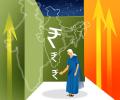
The World Bank has affirmed India's strong position to withstand the current global energy shock, citing high foreign exchange reserves, fiscal space, and low inflation as key buffers supporting continued growth despite international headwinds.

Chief Economic Advisor V Anantha Nageswaran stated that the second half of the current fiscal year (FY27) is expected to be challenging due to increased downside risks to global growth and rising interest rates worldwide.
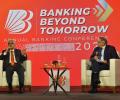
Bank of Baroda has launched 'bob World 2.0', an AI-powered mobile banking app featuring voice-command capabilities for payments and navigation. The updated app also includes a personal finance management module and a persona-based customer experience, aiming to offer intuitive, secure, and personalised banking services.

A joint report by Dell Technologies and Zinnov reveals that despite high ambition, nearly 70% of India's Global Capability Centres (GCCs) are stuck at the pilot stage for AI adoption. Foundational gaps in data, infrastructure, and governance are identified as key bottlenecks preventing the scaling of AI initiatives into enterprise-wide production. The report highlights the need for significant reskilling of the workforce and robust foundations for industrialising AI responsibly.

This article details the quarter-century journey of BRICS, from its inception as an economic acronym by a Goldman Sachs economist to its current status as an expanded eleven-member international bloc. It highlights its growth, key historical moments, and the significance of its upcoming summit, particularly with Iran's renewed importance in discussions.

India is actively integrating payment system harmonisation into its Free Trade Agreement (FTA) negotiations, especially with countries hosting a large Indian diaspora. This strategy aims to leverage India's growing fintech ecosystem, facilitate cross-border financial services, and position India as a global hub for financial services exports, particularly through platforms like GIFT City.

Union Communications Minister Jyotiraditya Scindia announced India's ambition to lead the world in 6G mobile technology and become a designer of global technology standards. Speaking at the Global Fintech Fest 2026, Scindia highlighted India's shift from being a technology market to a technology maker, emphasizing progress in 5G rollout, affordable data, and digital infrastructure driving fintech growth, while also stressing the importance of digital security.
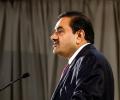
Adani Airport Holdings (AAHL) has announced it will raise 9,825 crore through a primary equity infusion from a consortium of global investors, including Alpha Wave Global, Premji Invest, Temasek, and funds managed by BlackRock, who will collectively acquire a 5.54 per cent stake.

United States Treasury Secretary Scott Bessent has warned that Iranian airlines could be effectively shut out of international travel from Wednesday, September 23, as Washington threatens secondary sanctions against foreign companies that continue providing services to Iran's carriers.

Arunachal Pradesh Chief Minister Pema Khandu highlighted that the success of UPI, which handles nearly half of the world's real-time digital transactions, stems from a collaborative ecosystem including financial inclusion, digital identity, and affordable internet. He attributed this digital payments revolution to the vision of PM Narendra Modi.

Thousands of yoga enthusiasts across the world marked the International Day of Yoga on Sunday, as Indian missions abroad organised events to highlight the ancient practice's role in fostering health and well-being.

India's Chief Economic Advisor V Anantha Nageswaran stated that the country's balance of payments (BoP) pressure is expected to remain a continuous challenge due to rising imports, commodity dependence, high global interest rates, and intense competition for capital.
Fitch Ratings has increased India's GDP growth forecast for the current fiscal year (FY'27) to 6.9 per cent, up from 6.4 per cent, attributing the revision to robust economic growth in the June quarter and overall economic resilience. The agency also anticipates the Reserve Bank of India (RBI) will raise interest rates by 0.25 per cent in October.

The challenge for India lies in navigating complex landscape to its best advantage. The BRICS Summit will test its navigation skills, asserts former foreign secretary Shyam Saran.

India and China are in what experts call 'a cooperation-versus-competition situation'.

Generative artificial intelligence (AI) is beginning to alter hiring patterns in South Asia, with multinational companies (MNCs) and firms integrated into global value chains (GVCs) reducing recruitment more sharply than domestic firms, signalling the technology's early impact on the region's export-oriented services sector, according to the World Bank's World Development Report 2026.
Moody's Analytics predicts India will remain the fastest-growing major economy in 2026 and 2027, but its pace will moderate due to a global slowdown, geopolitical risks, and financial market volatility, despite the boost from AI demand.

Chinese President Xi Jinping addressed the BRICS summit, urging the bloc to play a significant role in achieving peace and tranquillity in West Asia and the Gulf region. He highlighted BRICS' growth over two decades, its efforts in tackling global challenges, and its steadfastness in safeguarding the interests of the Global South. Xi called for opposing the Cold War mentality, strengthening multilateralism, and promoting cooperation in emerging domains like AI, as China prepares to chair the next summit.

India's economy recorded a robust 7.8 per cent growth in the April-June quarter of fiscal year 2026-27, surpassing both market expectations and the Reserve Bank of India's forecast. This strong performance positions India as the world's fastest-growing major economy, demonstrating resilience despite global economic uncertainties and geopolitical tensions, including the conflict in Iran. The Ministry of Statistics and Programme Implementation highlighted the sustained growth momentum amidst global headwinds.

It is important to understand that the rupee's appreciation, driven by the 2013 special swap scheme, reduced India's import costs for petroleum, oil, and gold, points out Dr Ashwani Mahajan, National Co-Convenor, Swadeshi Jagaran Manch.

For India, the goal is not simply to host another grand diplomatic gathering. It is to prove that a diverse coalition of emerging powers can still deliver.

Thousands gathered on the banks of the River Thames in London for the first-ever Ganga Aarti, a traditional Hindu ceremony of light and thanksgiving. Organised by Chinmaya Mission UK as part of the 'Totally Thames' festival, the event symbolised gratitude for nature and knowledge, while also celebrating 75 years of the Chinmaya Mission. The ceremony was conducted on land to ensure environmental responsibility.

Iranian President Masoud Pezeshkian urged BRICS nations to expand trade in national currencies and build an inclusive global economic framework. He criticised "unilateral sanctions" by Western powers, stating they make emerging economies vulnerable and impact global food security. Pezeshkian emphasised BRICS' role in creating a balanced world order and highlighted Iran's geopolitical and energy capacities for cooperation.

India is making a significant push to establish itself as a global semiconductor manufacturing hub, driven by strategic investments and policy support. The upcoming SEMICON India 2026 event will showcase the country's advancements and ambitions in this critical industry, which underpins virtually all modern electronic devices and has faced global supply chain vulnerabilities.

'It's A Cat And Mouse Game.'

Commerce Secretary Rajesh Agarwal highlighted the critical need for India to diversify its services exports beyond the dominant IT/ITeS and professional services sectors. Speaking at the Global Fintech Fest 2026, he emphasised the vast potential in the global financial services market, where India currently holds a small share, and stressed how fintech solutions, like UPI, can drive growth, reduce remittance costs, and support MSME trade finance, ultimately leading to sustainable economic expansion.

BRICS members have expressed 'serious concerns' over the unilateral imposition of trade and finance-related measures, including higher tariffs and non-tariff barriers, stating these actions distort trade and are inconsistent with WTO rules. The grouping also highlighted elevated risks to the global economic outlook due to geopolitical tensions, trade fragmentation, and protectionism.
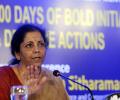
A high-level committee, including representatives from banks and payment associations, is set to decide on Merchant Discount Rate (MDR) for UPI transactions exceeding Rs 2,000 to merchants. While person-to-person and person-to-merchant transactions up to Rs 2,000 remain free, the move follows a recent amendment to the Payment and Settlement Systems Act, sparking debate and clarification from the Finance Minister that only certain high-value merchant transactions might incur charges.

The RSS-affiliated Swadeshi Jagran Manch (SJM) has urged the government to reconsider imposing a merchant discount rate (MDR) on UPI transactions above Rs 2,000, arguing that the costs do not warrant such a move. This comes after the government announced a 0.4 per cent fee on merchant transfers over Rs 2,000 from October 15, while assuring that person-to-person and small payments remain free. SJM co-convener Ashwani Mahajan highlighted that banks have not demanded MDR and that UPI has reduced their transaction costs.
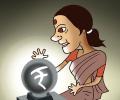
The Reserve Bank of India (RBI) has endorsed the introduction of a Merchant Discount Rate (MDR) on UPI transactions exceeding Rs 2,000, effective October 15. This move, which levies a 0.4 per cent fee on merchant payments above the threshold, aims to bolster the long-term sustainability and growth of India's digital payments ecosystem. The RBI clarified that person-to-person (P2P) transactions and small person-to-merchant (P2M) payments below Rs 2,000 will remain free for users, ensuring no direct charge on customers.

Russian President Vladimir Putin has proposed a new investment platform, based on the New Development Bank (NDB), to fund projects in trade, infrastructure, logistics, and technology across BRICS nations, emphasising that the grouping's expanding economic cooperation is not 'against anyone' but aims to advance members' national interests.

The BRICS summit in New Delhi brings together leaders from major emerging economies to address global challenges like trade disputes, geopolitical upheavals, and the economic impact of conflicts in Ukraine and West Asia. India, as chair, aims to position BRICS as an economic growth engine, focusing on the Global South's food, energy, and supply chain security. The summit also highlights the grouping's expansion and its growing influence in global governance.

RBI Deputy Governor S C Murmu stated that the introduction of merchant discount rate (MDR) on UPI transactions is unlikely to cause a shift back to cash, despite some concerns, emphasising that MDR will help the payments ecosystem recover costs.
Finance Minister Nirmala Sitharaman has urged the Reserve Bank of India to accelerate its central bank digital currency initiatives, emphasising the need to sharpen capabilities with the digital rupee amidst rapid advancements in tokenisation, agentic AI, and quantum computing. She also highlighted critical concerns regarding cybersecurity, warning that autonomous AI systems are evolving rapidly and require robust safeguards. Sitharaman proposed a federated industry platform to give India's technology ecosystem a collective international voice.

Prime Minister Narendra Modi hosted Iranian President Masoud Pezeshkian in New Delhi for talks focusing on the West Asia situation, bilateral relations, and BRICS cooperation. The meeting, Pezeshkian's first visit to India as president, comes amidst heightened tensions in West Asia due to new US sanctions on Iran and concerns over global oil supplies from the Strait of Hormuz. Both leaders emphasised regional stability and economic resilience.
